|
So extremely educational... yet students say they are
too fun to be called 'work'shops, so
we call them 'fun-shops'!
But that does not mean it's easy, don't get confused. Participants say they finish with their eyes and brains hurting, Michael makes them think and look so hard to make new, exciting images using his somewhat unique thought processes to constantly make award winning art! BUT that's what we want, right? You betcha.
Even pros get excited from taking this class; testimonials from some follow, as well as a whole page of them, as well as whole pages from other skill levels.
_______________________________________________
Why a Seewald class?
Aren't they all pretty much all the same- some just more expensive than others, right?
Big Wrongo on that answer if you said yes. Many guys teaching come from a technical background, Michael comes from an artistic one, then forced himself to learn the technical! He thought it a waste of time actually, at the time (in college, including the 'zone system' invented by Ansel Adams- the shooting and developing variances to control contrasts) but soon learned you needed to control all of the cameras functions so you could create all your great ideas.
Not only that, most photographers, as well as painters, never got to learn 'the secrets of the masters', the compositional elements that set the masters apart from the others, even with college degrees! Michael has attained this level, through many collegiate classes, especially one, and that is covered further down.
Many pros really have had no formal training, and are hoping their many decades of shooting is making them great, but lo and behold, many are still making 'amateur' mistakes, and it's sad. A few pros come to realize they are NOT producing the quality that Michael is constantly creating, and come to him for help. Good on them, better late than never.
_____________________
" this exciting class turned my digital camera into an artist's tool! I learned the difference between taking a picture and creating art. ...by taking this workshop Michael will open up a whole new world of photographic possibilities for you, he did me. ....”
Troy Garrow,
San Diego, Ca.
Class of 1.20-21.’07
_____________________
These classes are run by someone
with knowledge gleaned from:
- Childhood painting classes (first 'first place' award at the age of 13);
- A collegiate photographic degree (won his first 'first place' in a national photography award in a collegiate competition in 1971, at only 19);
- Workshops taken from other masters (whom worked with Ansel Adams);
- 40 years of hands on practice making a living at his art -including over 55 solo worldwide photographic trips, a month each = YEARS on the road creating his art;
-
Winner of dozens of national and international competitions including "Best of Show" or "Jurors' Choice" in many, since college;
- SINCE 1985 instructing HUNDREDS OF STUDENTS in photo workshops, all the while fine tuning his instruction by insisting they critique HIM on all aspects of his teaching, in locations all over the world, from Iceland to China, from Yosemite to India.
And most recent: Exhibiting his photographic art entitled 'Life Elsewhere' in a national fine art museum in Kunming, China in May of 2011.
All of this, by the way, has honed his skills in such a way as to help him garner the multitude of endearing and uplifting testimonials. Why is that important? Good question, read on...
_______________________________________________
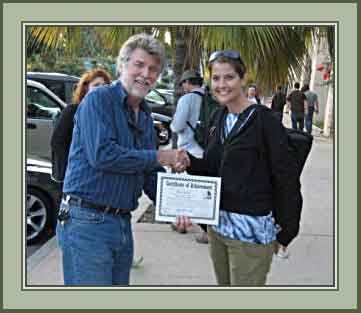
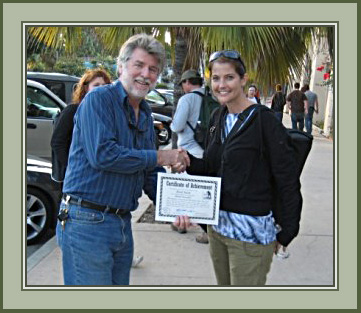
Click photo to enlarge/ photo copyright Aimee Werth 2006
Beginner photographer Becki Smith poses with Michael
and her new Certificate of Completion.
"Oh my goodness... I knew I had a lot to learn but I never imagined I could learn so much...! I took away so much knowledge and hands on experience from this workshop. I was somewhat nervous about my beginner skill-level but Michael's ability to teach while exercising his natural tendency to turn everything into a joke was great!! I was at ease in no time.
It was a true honor to be taught by someone with Michael's talent and experience. It is obvious that he truly enjoys sharing his God-given talent with others."
Becki Smith, San Diego, California.
Beginner photographer/ digital photography class of 11/'06
_______________________________________________
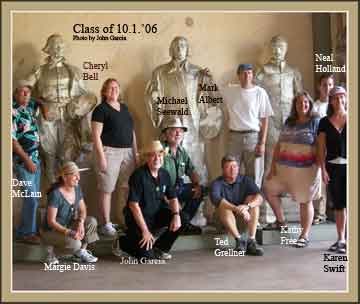
San Diego class of 10.1.'06 by John Garcia.
Click photo to enlarge.
FROM MICHAEL...
Dear Photographer, How many times have you seen an image worth taking on your vacation only to get to your monitor back home and wonder "What was I trying to capture here? Was it those tiny trees on the far horizon that I can barely see? And what are these two bright orange blobs- (hit zoom feature to find out) oh, trash cans- yucko!?"
"And what are these strange, out of focus lines in the foreground - oh - it's a fence, how distracting. Oh yeah, now I remember. I was trying to get those tiny clouds reflecting in the lagoon by that boat- what went wrong?"
Sound familiar? Even the auto-focus, auto-exposure cameras are not 'auto-composing', that's your job. And that is something that you can and must learn to get better. Not only that, half the time the 'auto' feature works against you, the settings you'll need to make the image perfect are not what the camera is programmed to shoot at.
I can change all that, YOU'LL END UP BEING THE MASTER OF THE SETTINGS, NOT YOUR CAMERA! GUARANTEED. Not only that, you won't be a 'slave to your flash' any longer either. How? Well, we will learn how to shoot in manual settings, and learn what the settings mean and use them to 'make', not 'take' photos. And we will take pictures in such dark areas you won't think the camera will work- but it will, and you'll make WOWS!
But hey, don't start breathing hard when you hear 'shoot in manual', take a deep breath, in... out...in- ok, now we know folks get reeeaal nervous of the thought of leaning how to shoot in all manual, even some pros came to us having not having used it in decades (relying on the camera to 'think' for us in auto- a big no-no as you will learn, and learn why too)."
Anyways read the following, and remember- BREATH:
"..I thought he did a great job of explaining everything. He was very patient with us and didn't make us feel bad when we didn't know or understand things....
...I went into the class hoping to learn the manual functions of my camera, as I had never learned that. I've tried reading books and it just never "clicked". I really felt that I got it after day one, and after day three I felt completely comfortable. ...I learned a LOT about all the functions on my camera I never used and feel like that was a huge benefit. I loved that we went out and "shot" in the field so that we could really get comfortable with the new ideas and techniques we were learning.
Michael picked beautiful spots to shoot. ... I really look forward to taking more classes ..."
Pamela Scholten,
Class of 2.25-27.'11
Intermediate photographer, Anaheim, CA
_______________________________________________
Well, there is GOOD NEWS. Master photographer Michael Seewald is willing to share his techniques, and reveal all of the 'secret formulas' that he has figured out to make dramatic, award winning art. Art that has won him dozens of national and international competitions, including 'Best of Shows' at:
* The 'International Photographic Competition', San Diego Fair (besting 3,300 world-wide entries);
* The San Diego Museum of Photographic Art (besting hundreds of world-wide entries with his solo entry, the only time he's ever entered);
* San Dieguito Art Guild (local competitions, winning dozens of times, including the 'Grumbacher Gold', an award that took the organization over 30 years to be able to give away);
* San Diego Art Institute (both national and international divisions).
_______________________________________________
________________
Click on image to enlarge.
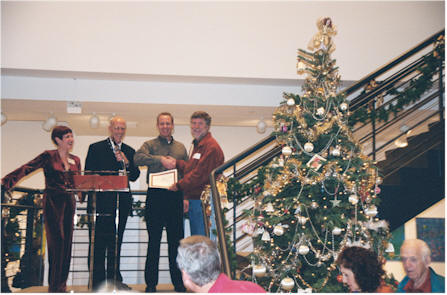
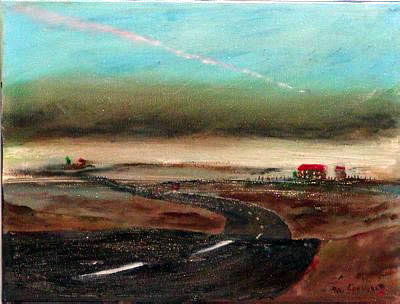
Here, Seewald receives 'Jurors Choice' Award, San Diego Art Institute
for his oil painting entitled Lonely Road and Vapor Trails -yes,
Michael paints too, his award winning techniques work for both art forms.
_______________________________________________
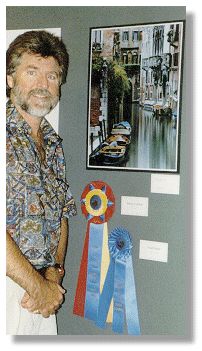
Michael does not have time to enter many competitions but when he does he often wins.
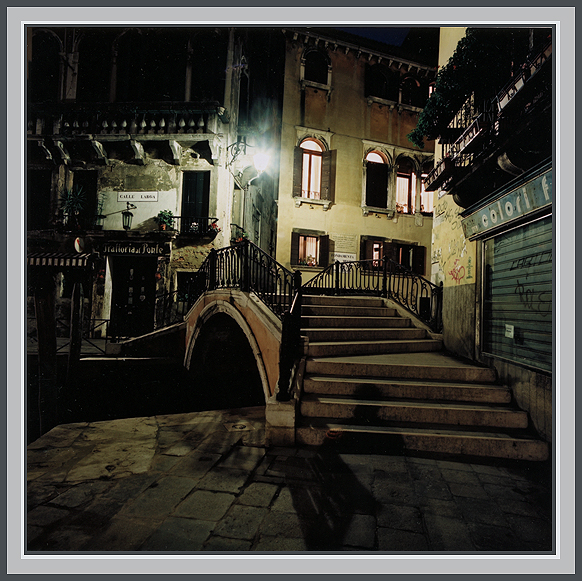
Here, he takes 'First Place Color' and then 'Best of Show' at the International Photo Competition at the San Diego County Fair, 1996. That's top honors from over 3,300 worldwide entries with his Canal Reflections, Venice, Italy.
So what are your odds? That's right, one in every 3,300 years, BUT Michael did win. And since he only enters every four or five years, what are the real odds for you to win if you to only entered as often as him? Right, about once in every 15,000 years!!! NOT TOO GOOD HUH?
And by the way, hundreds of Seewald's collectors have purchased, sight unseen, over $1,000,000.00 of his art in the past two decades! He now receives an average of $2,700 per photograph, sight unseen, a year in advance of the patron even seeing what they have purchased!
"I'm really blessed" Michael says, "heck, most photographers have a hard time selling them AFTER they've make them, let alone in advance".
_______________________________________________
"I'm re-infused with excitement about my existing work....I feel I received more than my moneys worth!"
Chris Barley, Advanced photographer,
Cardiff by the Sea, California
_______________________________________________
Many of his sponsors have invested in 8 or more trips/images, showing great happiness with his art and program! Some of his older, and thus more limited edition images, are running well over $10,000 apiece, some at $50k and two at $100,000- increasing to $500K with the next sale (see Pianoman, Shanghai China, '88 or The Three Graces, Xian, China '88).
Don't you want to make art so strong it moves folks to purchase them sight-unseen too? You bet.
_______________________________________________
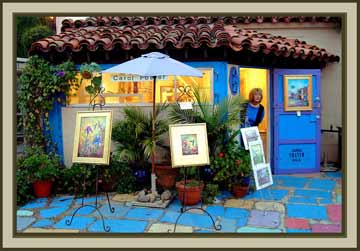
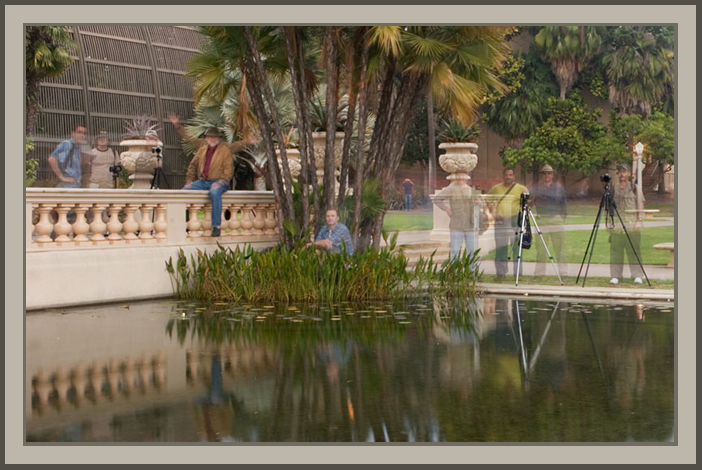
Photo copyright / courtesy John Pohlman, class of 11.5-6.'05.
Artist Carol Foster peeks out of her studio, Spanish Village, Balboa Park.
Using many of Michael's newly acquired principles, student John Pohlman made this strong image while in the class and entered it into the San Diego International Photo Competition, on Michael's suggestion, and he WON! Can you explain all the reasons why it is so strong? Well, after the class it will be easy to.
_______________________________________________
Michael's three and
four day classes cover:
Day I - Theory
Day one -we 'build a race car', but that does not make us race car drivers- yet. In essence, we learn all the thought processes to make our art DRAMATIC, with light, line, forms and center/centers of interest. Michael will show you how to do it WITH YOUR EXISTING PHOTOS, making award winners out of a lot of hum-drum pieces we bring in.
This first day zeroes in on what Michael finds to be the weak link in every photographers (or painters) arsenal; composition. That 'ability to see' on how an image translates from a 3-D world onto a 2-D surface. It's an 'indoor classroom setting', no photos are made this day. But what is made, after covering a few pages of Michael's, and others, rules of great composition, and the varying 'elements' that both make, and break, an image. We then make a lot of great art from the photos (or paintings in case of painters- some take it too), you bring in, as we go over your existing 'art' and see where they 'worked' and where they did not, and now improve them 'after the fact' with cropping techniques Michael will show you.
Yes, EVEN those that adamantly say composition is their strong point soon realize that maybe it's not as much as they had thought!!! That's because they will learn the myriad of thought processes they'd never even dreamed about to make them even stronger. Taught from someone that leaned all these 'rules', and then practiced improving on all on them on his own for 40 years now, they quickly realize there is way more to it than they had imagined. This especially is true for professionals that take this class, those not consistently entering and winning major competitions, as Michael does. More on this in a minute.
_______________________________________________
"Michael Seewald is amazing to work with! ...the class was so very helpful and surprising to someone like me who 'thought' they had a good eye for composition. He pushes you to the limit of frustration to better bring about the artist in you. At the same time he is fun, generous and kind. And most of all, PATIENT! I am amazed at his graciousness with everyone no matter what the skill level or equipment brought to the class.
His suggestions are never without merit and always helpful. Oh, and his story telling isn't bad either. At the end of the class you will want more and guaranteed you will want to go on at least one trip with him in the future. Very Addictive. Very fun! Very educational!
Thank you Michael for all your generosity!"
D'Arcy Lewis,
Temecula, CA
Class of 5.'06
_______________________________________________
Day two onward -we not only learn how to drive our newly built cars, but we are soon driving them VERY FAST!! Yes, Michael will run us though a series of exercises to get us to 'see' like he does, something that blows a lot of pros away, ones that have spent decades trying to make strong art and it just wasn't happening. Make sure seat belts are fastened, ok? By the end of day three we are not just winning heats, we are WINNING RACES!
This part is where the photographer learns the fine technical aspects of creating too, and gets to practice marrying the two elements together, the compositional with the technical. You need both.
_______________________________________________
"You must know that when you finish my class you won't be making good photos...", Michael Seewald promises, "You'll be making great ones. (We call 'em WOWS!)
And, as one student said, 'they will be on purpose rather than by accident.' "
_______________________________________________
Usually, for our students in this region, a visit into the San Diego Museum of Photographic Arts is included at no additional charge. The Carmel, Napa and Yosemite classes will have gallery walk-through/ critique sessions. This helps cement Michael's thought processes and you'll get to see where they actually improve other folks art that is already finished and hanging on display. Yep, just because they are on display does not mean those artist's had it all together.
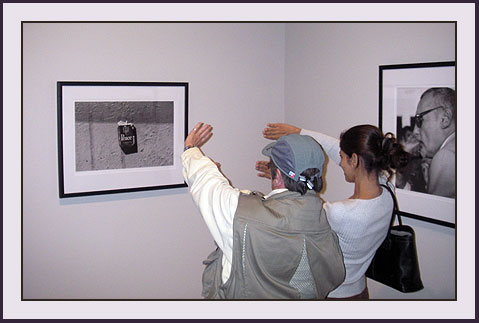
Photo copyright Michael Seewald
Seewald's students, now knowledgeable in 'proper' cropping techniques- the why and how of placing the subjects in certain areas of the photo for longer viewer involvement, use their hands to confirm that sure enough, cropping art even here at the museum can strengthen it. Heck, we will even 'fix' one or two of Ansel Adams' weaker pieces if they are on display! You'll see.
_______________________________________________
More of what Michael's weekend class generally covers:
(Note: Due to time constraints we may not cover every process due
to participants needs of extra instruction in varying departments.)
* Rules of composition, and why they can make or break a piece of art. From the elementary ones to the more highly developed ones.
* How to actually control the eye of the viewer of you photographs, and how to place certain elements in certain places to control that eye's movement. This is Michael's forte, and few photographers, or painters for that matter, have reached his level of expertise in this department. The 'why not' covered further down.
* 12 deadly elements that will kill what would otherwise have been a good photograph, and how and why to turn them around and have them actually 'work for you' at certain times. (Find out about tonal merger, line merger and color merger problems, how to define them, how to see them, how to control them and how to eliminate them- either in the ones already created or in future images). How to crop portraits and landscapes to make boring art come alive, how to keep an eye out for elements that work against the composition instead of helping it.
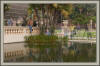
Photo copyright / courtesy Doug Peck, class of 11.'05
Students with no skills at all end up making exciting images such as this, with knowledge taught by Michael throughout an information packed three or four day fun-shop, all ON MANUAL settings too.
* Learn how a light meter 'sees' and why IT IS NOT REALLY A 'LIGHT' METER, BUT A 'GRAY' METER. Learn how to measure a scene properly, DAY OR NIGHT and set your own aperture and shutter settings, thus foregoing the 'auto' settings, if you wish, so you can create art that suits your needs. This is a must for shots as the one above- auto setting will never get you there folks!
* Learn how to use some of the tools built into your digital camera that let you know if you've made a proper exposure, BEFORE you go and look on your monitor, seeing it's poorly exposed- too late then.
* 'Pre-visualizing' the image. How to get what you originally intended through a series of techniques Michael has discovered that work great in his own art making- techniques not taught to him in four years of collegiate photo classes. Take the 'guesswork' out of the process; no more 'luck only' images. (Or "Man, Michael sure gets 'lucky' winning about HALF of all of the competitions he ever enters!") They could soon start saying that about you!
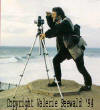
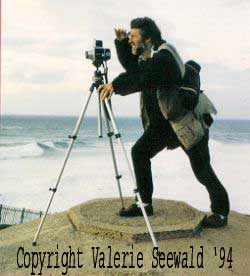
Photo copyright
Valerie Seewald. '94
Michael Seewald working
a stormy winter's day
in San Sebastian, Spain.
* How to get the perfect prints from the lab, whether you use film or digital recording devices, and how to communicate with them to get good work delivered to you in the first place.
* What the digital world has to offer, and how to incorporate it into your work-flow. Which materials and processes are archival. What 'digital darkrooms' will help you do over standard darkrooms, if anything. What's the latest!
* Mounting, matting and framing tips of the finished, and now soon to be, 'award-winners'.
* Both color and black and white techniques;
* What, when, where, if and how to use filters on your lenses;
* And if that was not enough, much, much more.
As Michael always says...
"Bring a big brain and a large notepad!"
From beginners with instamatics and digital cameras to those advanced folks with view cameras, all learn. With proper instruction this art form becomes less mysterious and more fun!
_______________________________________________
"...Like many amateur photographers, I subscribe to several photo magazines, have purchased dozens of books on photographic technique and technology, and spent more than I probably should have on equipment. Why wasn't I making really great photographs? I found most of the answers in Seewald's workshops, the best photographic investment I've made, short of sponsoring one of his works."
Bill Landon,
advanced photographer,
Murrieta, California
Class of 5.'96
_______________________________________________
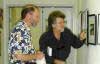
Photo © Al Joseph 2000
College photo class instructor Leland Forrester, along with Michael Seewald, judge a photograph for the North County Photo Society's annual photo competitions.
_______________________________________________
Seewald not only knows a thing or two about winning competitions, but because he wins so often, he's recruited to judge them too. He turned down a request to judge the San Diego International Photography Competition more than once- "I'd rather leave the option to enter" he told the department head. But who knows, maybe someday he'll judge that one too.
Designed so that beginners, intermediate or advanced photographers (AND PAINTERS) move, not just to the next level, but several levels up.
_______________________________________________
..."and Michael, I was surprised you're as good a teacher as you are a photographer"....
Don Dreyfus, Atty.,
Solana Beach, California
Class of 2.'03 (and now 'refresher class' of 1.'08)
_______________________________________________
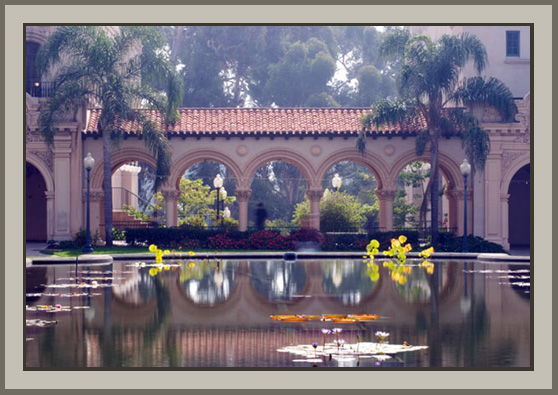
Click photo to enlarge.
Click photo to enlarge.
Photo courtesy/copyright class participant Doug Peck, class of 11.5-6.'05.
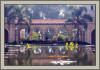
Reflections, San Diego Museum of Photographic Arts building.
_______________________________________________
"If you feel, as over 80% do, that you received 'more than your monies worth' from the fun-shop THEN GIVE ME MORE MONEY!... (nah, just kidding, you keep the difference, it's on me- just send referrals)." MS
_______________________________________________
"I really enjoyed the class and I came out with a lot more value from it than I thought I would. It made me want to use my camera for other uses besides my commercial photography too. It opened the door to the joy of photography ...."
Rick Whitehead,
Professional photographer.
N. San Diego County
Class of 11.'05
_______________________________________________
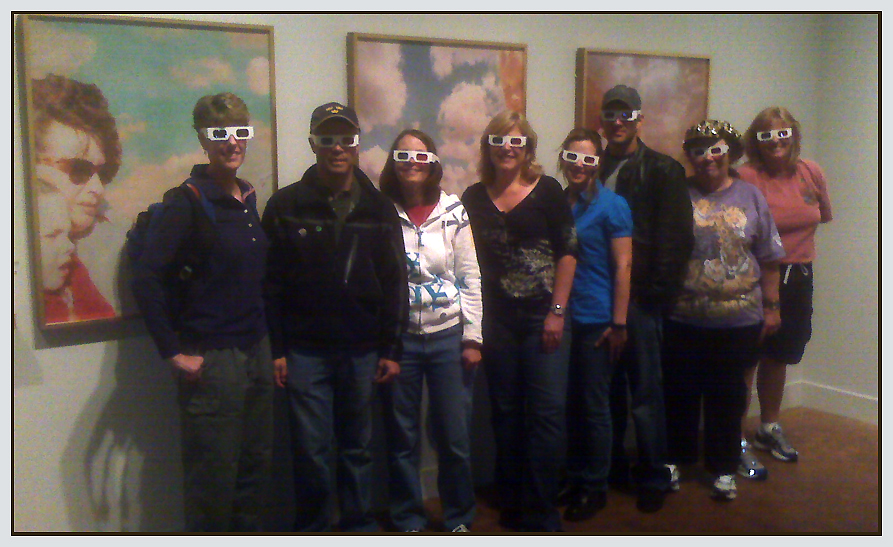
Click image to enlarge. / San Diego, May 2010 class.
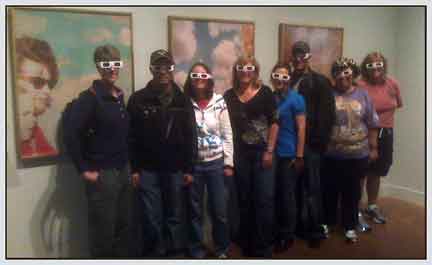
Are we having fun yet? Let's step into the Way Back Machine! Entitled 3-D Students, this was taken by Michael during their brief break from creating, at the Museum of Photographic Art in Balboa Park, San Diego. It was after the entire class donned 3-D viewing glasses to peruse some 3-D enlargements.
Michael arranges for you to get in free, and he runs the 'self guided' tour for each of his San Diego classes.
_______________________________________________
"Hi Valerie,
Well, I'm back in cold New England, and just read your e-mail, referencing the Fun-Shop of last week. Thank you BOTH very much; the class was worth all of the '6000 mile' trip; you can quote me ;). "
Steve Silberstein,
Class of 2.'03.
...Unless you're the lead dog, the scenery never changes.
_______________________________________________
BUT, as always,
nothing could be perfect!
So here is the 'small print', the 'down side', the 'I knew there was a catch' of these Seewald classes- it all sounds too good to be true, there is no free lunch, yada, yada, yada. And since we are so up-front about everything, even THIS, here it is...
The Seewald Class WARNING
Warning: Seewald's photo classes have
been found to cause sleep deprivation!
What the heck? Sleep deprivation? That's right, sleep deprivation. How's that you ask again? Well, after day one on the learning of 'the theory of seeing photographically', where participants learn how to take the images they have brought to class and, through Seewald's tutelage of knowing how to balance the piece, how to eliminate 'distracting elements' (and what those even are, and why), and how to arrange elements to control eye movement (so you, and other folks, look longer at your art- as now they are more EXCITING as ART), thus turning many of them into award winners, many students have reported they have been just too excited to sleep when they got home!
Yes, they come to the next days' class a bit tired, a cup of java in each hand, admitting that instead of sleeping they were thinking about the myriad of possibilities from all of their other images sitting in boxes- bringing many out and applying their new found knowledge to improve them immensely one by one, mostly thru cropping out the problems they have now been taught to notice that will ruin the image if left in! Problems, and distractions, that you will not find in any of Michael's work. (Is that why he wins so many awards? - you bet).
_______________________________________________
More critique replies from the same Bobby Brooks as above:
Question to beginners- was DAY 2 (fieldwork) too hard?
"No, the second day was really great, but I spent much of the night of day one thinking about the 2-D vs 3-D effect and how it affects my photos, as explained by Michael with his examples, along with merger problems, object intrusions, and a lot of other distractions to be on the lookout for. Those I also learned how to find and eliminate in my photos. I thought a lot about how light makes or breaks the photo and I was really impressed with how I really could see what Mr. Seewald was talking about now, in real life and in my 'art'. The concepts we discussed on Day 1 were right there upfront and personal.
...The fieldwork was great because it reinforced, with live examples and assignments, the concepts of strong compositions, use of light, lines, forms and centers of interest, etc. that we talked about on day one...."
|